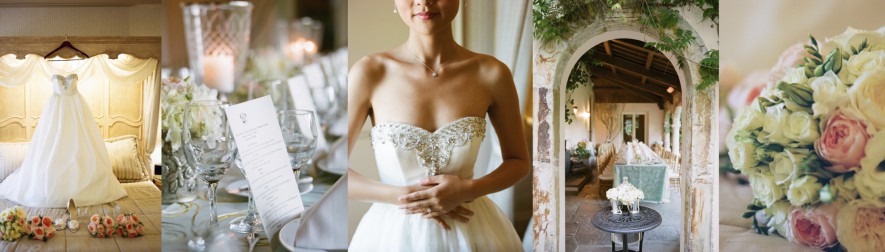
When planning your wedding reception, you might be in doubt what’s better, more beautiful, more practical – round or rectangular dining tables?
While there is certainly no “right” or “wrong” and no “one-size-fits-all” solution – there are several aspects to consider.
1.) How much room do you have, relative to your guest count? Rectangular tables are more “space-economical” than round ones.

2.) What’s the shape of your dining/ballroom? Square or very open spaces (like, e.g. a lawn) look better with round tables, narrow rectangular floor plans look better with rectangular tables.

3.) How formal is your event? Round tables signal more formality, while rectangular tables, especially if arranged in long rows, are considered more informal.

4.) What’s your design vision? Tall, round floral centerpieces are best displayed on round tables;

floral/greenery garlands look best on long rows of end-to-end rectangular tables.

5.) Practical necessities: aisles need to be 36 inches wide for guest movement and for waitstaff/service.

Advantages and disadvantages of round tables:
They facilitate interaction between guests and feel more intimate, but as we stated above, they take up more space than rectangular ones.
Advantages and disadvantages of rectangular tables:
Guest interaction is more limited to the persons seated to the immediate left and right and to the person across the table. Rectangular tables are great for buffet set-ups, food stations and bar set-ups and for very structured dinner layouts, but they might need some extra dress-up in order not to look too basic.
Can you mix round and rectangular dining tables?
YES! But it should not be done haphazardly, but preferably in a symmetrical pattern. Look how beautiful this can be:

I hope this all will help you in envisioning YOUR perfect dinner setup!